Custom Instructions vs Memory vs Projects: What Should Go Where in ChatGPT?
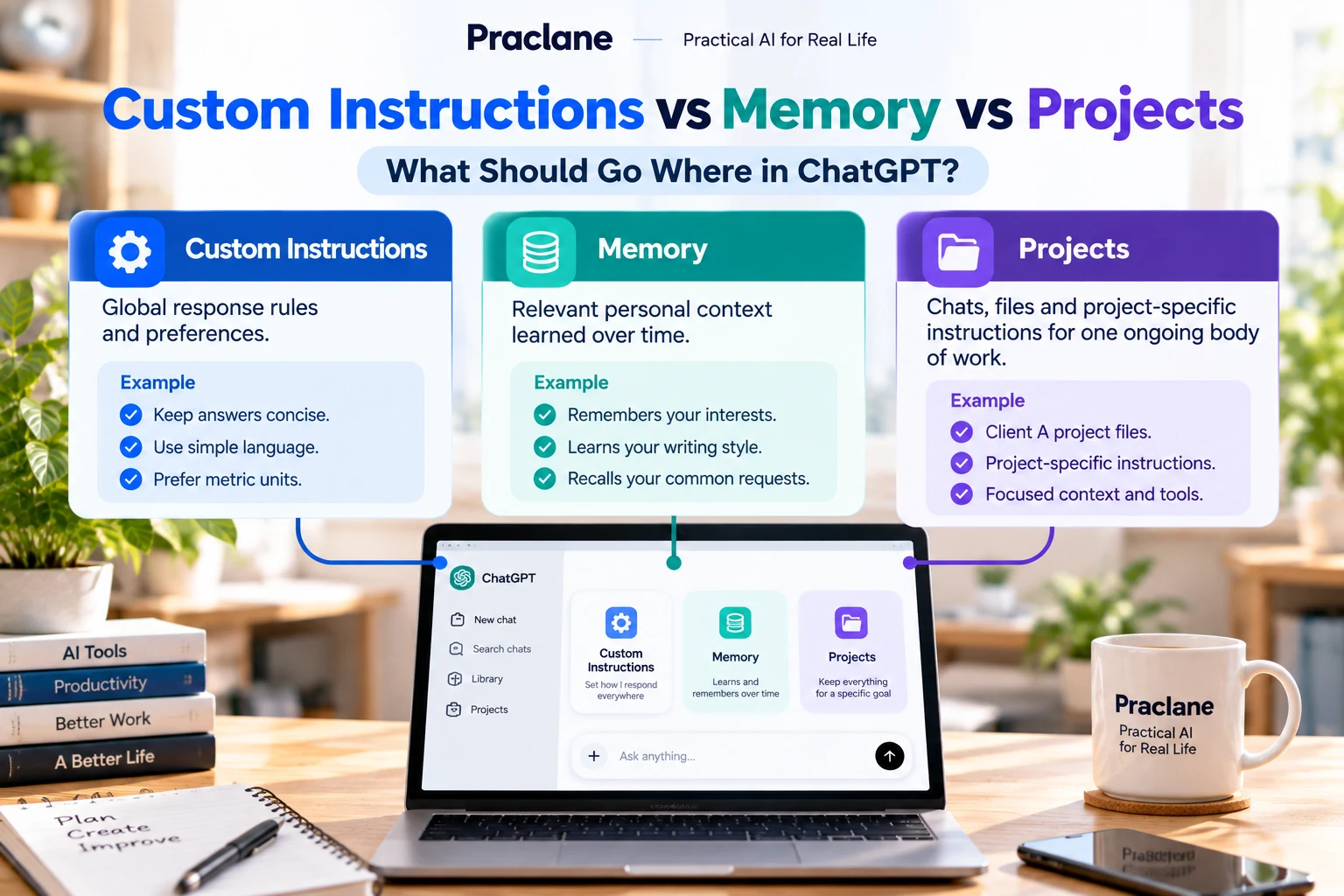
ChatGPT now has several ways to remember or reuse context: Custom Instructions, Memory, and Projects. They sound similar, but they solve different problems.
If you put the same information everywhere, you can create duplicated or conflicting context. If you put it in the wrong place, ChatGPT may apply it too broadly—or fail to use it when you expected.
This guide shows what each feature is for, what information belongs there, and how to build a cleaner personalization system.
Quick Answer
| Feature | Best For | Scope | Example |
|---|---|---|---|
| Custom Instructions | Explicit rules you want ChatGPT to follow | Across chats | “Keep answers concise and use metric units.” |
| Memory | Relevant personal context that develops over time | Across chats, depending on settings | Your recurring preferences, background, or ongoing context |
| Projects | Context for one ongoing body of work | Inside a project | Files, instructions, and chats for one client or goal |
1. What Custom Instructions Are For
Custom Instructions are direct instructions you write yourself. OpenAI’s current documentation says they are available on all plans across web, desktop, iOS, and Android.
The strongest use case is stable guidance you want applied broadly.
- Preferred answer length
- Tone and formatting rules
- Units, date format, or terminology preferences
- How you want explanations structured
- General working preferences
When you explain technical topics, start with the practical answer, then explain the reasoning. Use concise paragraphs and include a short example when useful.
That is a good Custom Instruction because it describes how ChatGPT should respond, not the context of one temporary project.
2. What Memory Is For
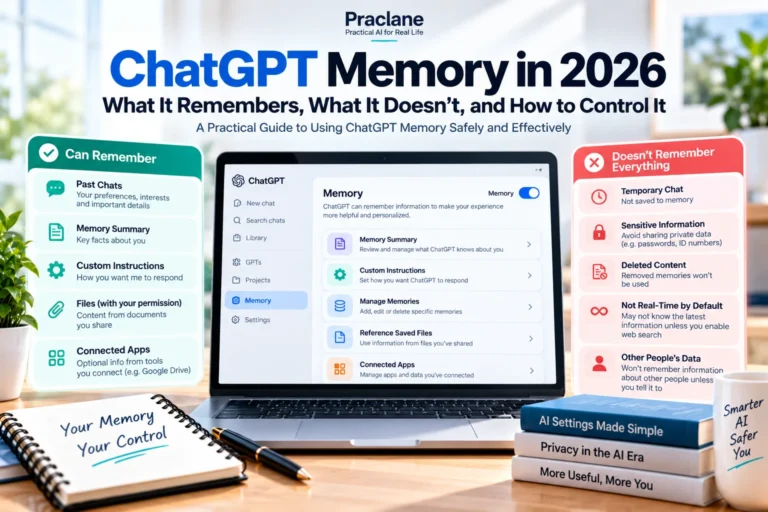
Memory is different. It can use relevant information from past chats and, depending on your plan and settings, other available sources such as saved memories, Custom Instructions, Library files, or connected apps.
Memory is useful for context that can reduce repetition over time:
- Recurring preferences
- Background information that changes how advice should be framed
- Longer-term goals
- People, tools, or routines that come up repeatedly
- Context ChatGPT can reuse when relevant
Memory does not retain every detail from every conversation. OpenAI says ChatGPT selects relevant context when it is likely to improve a response.
For a full privacy and control guide, see our ChatGPT Memory in 2026 article.
3. What Projects Are For
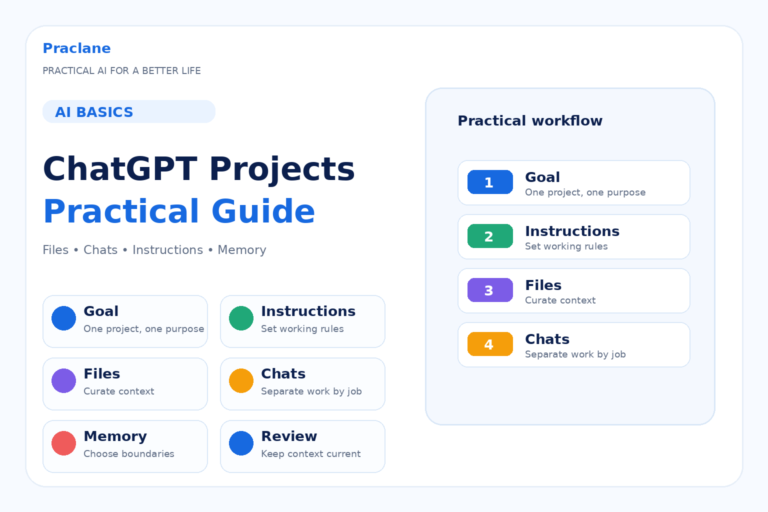
Projects are for bounded ongoing work. A Project can keep related chats, files, and instructions together so ChatGPT can work from the same project context over time.
Examples:
- A client account
- A dissertation or research project
- A job search
- A content site
- A product launch
- A relocation plan
Projects can also use default memory or project-only memory. Project-only memory keeps references limited to the project instead of allowing that context to spill into unrelated conversations.
For a setup guide, see How to Use ChatGPT Projects.
The Most Common Mistake: Putting Project Context in Global Instructions
Suppose you are working on a six-month project for a healthcare client. You could put the client’s audience, terminology, deliverable format, and brand rules into Custom Instructions—but then those instructions may influence unrelated chats.
A cleaner setup is:
- Custom Instructions: your general writing and working preferences
- Memory: recurring context about you that may matter across chats
- Project: client-specific files, rules, terminology, and deliverables
Controlled Example: The Same Preference in Three Places
Imagine the preference: “Use plain English and define acronyms.”
| Where You Put It | What Happens | Good Choice? |
|---|---|---|
| Custom Instructions | Applied broadly to your conversations | Yes, if you want it almost everywhere |
| Memory | May be used when ChatGPT decides it is relevant | Possible, but less explicit |
| One Project | Applied only within that project’s context | Best if it is client- or project-specific |
The information is identical. The difference is scope and reliability.
What Should Go in Custom Instructions?
- Stable formatting preferences
- Preferred explanation style
- Language or unit preferences
- General constraints that should apply broadly
- Explicit instructions you do not want ChatGPT to infer
OpenAI currently allows up to 1,500 characters for Free and Go users and up to 5,000 characters for Plus, Pro, Enterprise, Business, and Education users.
What Should Go in Memory?
- Preferences that developed naturally through conversations
- Recurring goals or context
- Useful background you do not want to repeat constantly
- Information that may be helpful across different topics
Do not use Memory as your only place for a rule that must always be followed. If the instruction is critical and explicit, Custom Instructions or project instructions are more appropriate.
What Should Go in a Project?
- Project files
- Project-specific terminology
- Brand or client rules
- Reusable project instructions
- Chats that belong to the same goal
- Reference material that should not affect unrelated conversations
A Practical Setup for Most People
- Keep Custom Instructions short and global.
- Let Memory handle recurring personal context when useful.
- Create Projects for work that lasts more than a few conversations.
- Use project-only memory when you need stronger boundaries.
- Review settings when ChatGPT starts using stale or irrelevant context.
When Context Conflicts
If ChatGPT behaves inconsistently, ask yourself where the conflicting instruction might live. A project instruction can conflict with a broad Custom Instruction, and Memory may surface older context that no longer matches your current goal.
Use the Memory Sources shown beneath responses when available to inspect what context influenced the answer.
FAQ
Is Memory the same as Custom Instructions?
No. Custom Instructions are explicit guidance you write. Memory can use relevant information that develops across conversations and other available sources.
Should I put my job title in Custom Instructions or Memory?
If it is important context you want used broadly and consistently, Custom Instructions can be appropriate. If it emerged naturally and only matters when relevant, Memory may be enough.
Should client information go into Memory?
Usually not if it belongs to one client or engagement. A dedicated Project gives you a cleaner scope and can use project-only memory.
Official Sources
Final Thoughts
The cleanest mental model is simple: Custom Instructions tell ChatGPT how to work with you, Memory helps it remember relevant context about you, and Projects keep one body of work together.