How to Use ChatGPT for Moving: A 30-Day Checklist From Packing to Utilities
Moving looks simple on a calendar: pick a date, pack boxes, move, unpack. In practice, dozens of small tasks happen at different times—utilities, address changes, supplies, cleaning, movers, documents, keys, subscriptions, and the first week in the new place.
ChatGPT is useful here because it can turn a messy list of responsibilities into a moving checklist organized by time, priority, and dependency. The best use is not asking it to “plan my move” once. It is giving it your real dates and constraints, then using it as a planning assistant throughout the month.
Quick Start: Copy This Moving-Plan Prompt
I am moving from [CURRENT HOME] to [NEW HOME] on [MOVE DATE]. Create a practical 30-day moving plan. Organize tasks into 4 weeks before, 2 weeks before, 1 week before, move day, and first week after. Include packing, utilities, address changes, cleaning, transportation, documents, subscriptions, food, pets or children if relevant, and first-night essentials. Mark tasks that depend on local rules or provider deadlines as “verify locally” instead of guessing. Ask me for any missing information that would materially change the plan.
Step 1: Give ChatGPT the Details That Actually Change the Plan
- Move date
- Distance: local, domestic long-distance, or international
- Apartment vs house
- Renting vs owning
- Number of people moving
- Pets or children
- Professional movers vs self-move
- Elevator, parking, or loading restrictions
- Current utilities and new utilities
- Any fixed work, school, or travel dates near the move
The more of these you provide, the less generic the checklist becomes.
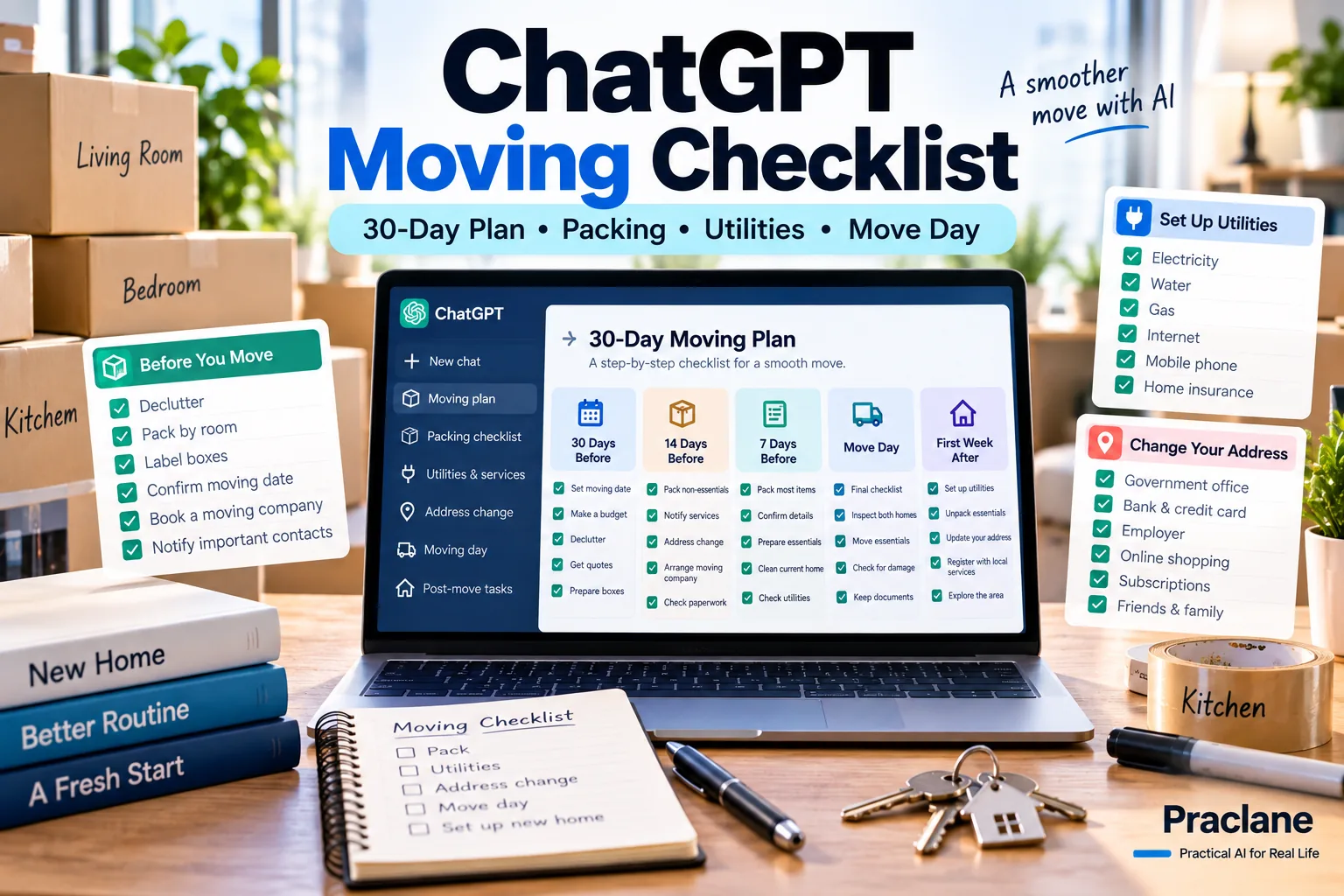
30 Days Before: Build the Move Map
- Confirm move date and access times
- Book movers, truck, or transport if needed
- Create a room-by-room inventory
- Decide what to sell, donate, discard, or move
- List utility and service accounts
- Check lease, building, elevator, parking, or loading rules
- Start a change-of-address list
- Estimate packing supplies
Turn this inventory into four groups: Move, Sell, Donate, Discard. Prioritize bulky items and anything that affects moving cost. Do not make disposal assumptions; flag anything that may require local rules.
14 Days Before: Lock Down Services and Deadlines
Two weeks out is where missed administrative tasks start becoming expensive or inconvenient.
- Schedule electricity, gas, water, internet, or other utilities
- Confirm mover details and arrival window
- Arrange building access if required
- Update important institutions and subscriptions
- Plan cleaning for the old and new home
- Begin packing low-use rooms
- Create a folder for contracts, receipts, keys, and move documents
Create an address-change checklist for my situation. Group it by government/official records, banking and insurance, work or school, subscriptions, healthcare, deliveries, and personal contacts. Mark anything whose deadline depends on my country or city as “verify locally.”
7 Days Before: Reduce Decision Load
The last week should be about execution, not discovering new categories of work.
- Finish most packing
- Label boxes by room and priority
- Separate documents, medications, chargers, valuables, and keys
- Use or donate food that will not move well
- Confirm payment method for movers or transport
- Prepare cleaning supplies
- Photograph valuable items if useful for your records
- Plan meals for the final two days and first night
Use a “First Night” Box
One of the simplest ways to make move day easier is to keep one box or bag out of the moving system entirely.
Create a first-night moving checklist for two adults. Include only what we are likely to need from arrival until the next morning: hygiene, medication, chargers, clothes, basic food, cleaning, bedding, tools, documents, and anything easy to forget.
Move Day: Use a Short Operational Checklist
| Before Leaving | At the New Home |
|---|---|
| Final room check | Confirm access and keys |
| Record meter readings if relevant | Check utilities and basic safety |
| Keep documents and valuables with you | Direct boxes by room |
| Photograph condition if useful | Locate first-night box |
| Return keys as required | Prioritize bed, bathroom, chargers, food |
Move day is not the time for a 70-item AI-generated checklist. Ask ChatGPT to compress the plan to the handful of tasks that can still go wrong that day.
Here is my full moving plan. Reduce it to a move-day checklist with no more than 12 items. Include only tasks that must happen today or could cause a serious problem if forgotten.
First Week After: Finish the Move, Not Just the Boxes
- Confirm utilities and internet are working as expected
- Finish important address changes
- Check recurring deliveries and subscriptions
- Unpack essentials before low-priority storage
- Record maintenance issues or damage
- Organize receipts and moving expenses
- Identify missing household items before buying duplicates
Based on this list of boxes and rooms, create a three-day unpacking sequence. Prioritize sleep, hygiene, cooking, work, and safety before decoration or low-use storage.
Turn the Checklist Into a Weekly Status Review
Once the first plan exists, do not rebuild it every time. Give ChatGPT the current status and ask it to update only the next actions.
Here is my moving checklist and current status. Mark completed items, identify anything now overdue, move blocked items into a separate section, and give me the five most important actions for the next three days. Do not add new tasks unless they are clearly implied by my existing plan.
If you like this review style, our ChatGPT weekly review workflow shows how to turn a large task list into a repeated planning routine.
Where ChatGPT Should Not Guess
- Legal notice periods
- Government address-change deadlines
- Utility cancellation rules
- Building move-in restrictions
- Insurance requirements
- Parking permits
- Waste-disposal rules
- International customs or immigration requirements
Ask ChatGPT to help you identify what needs verification, then confirm the actual rule with the responsible provider, building manager, government agency, or official website.
A Better Prompt for Local Verification
Review my moving checklist and identify every item that may depend on local rules, provider policies, dates, fees, or deadlines. For those items, search current official sources where available. Separate confirmed requirements from general suggestions and clearly label anything I still need to verify myself.
Common Mistakes
- Using a generic checklist without adding your real move date
- Mixing move-day tasks with tasks that should happen weeks earlier
- Letting ChatGPT invent local deadlines
- Packing documents or medication into inaccessible boxes
- Failing to separate “must do” from “nice to do”
- Creating a huge list but never updating status
Final Thoughts
ChatGPT is most useful during a move when it acts as a planning layer: organize the tasks, expose missing categories, reduce the next step to something manageable, and remind you what still requires real-world verification.