ChatGPT vs Perplexity: Which Is Better for Search and Research in 2026?
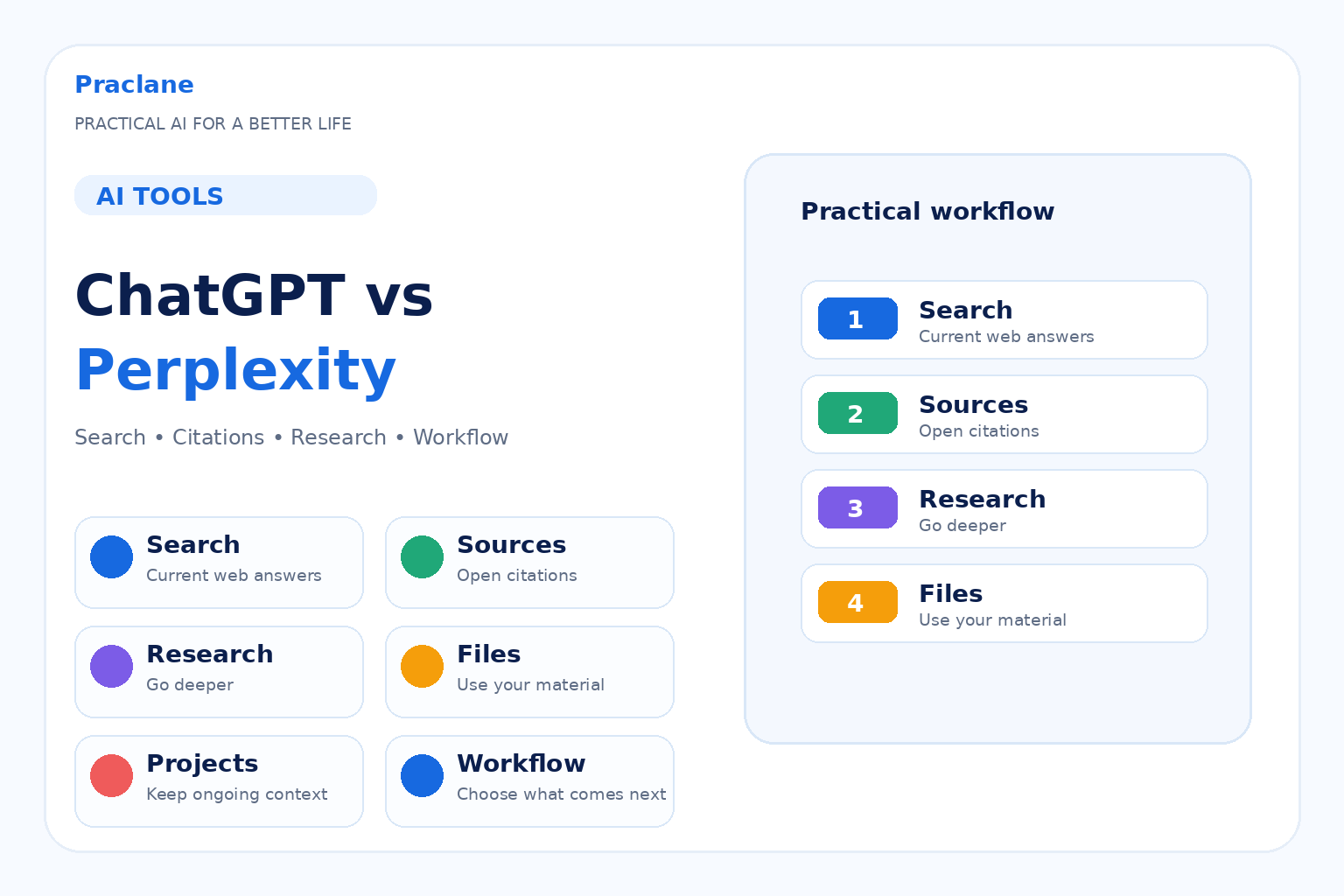
ChatGPT and Perplexity can both search the web, cite sources, analyze files, and help with research. The difference is less about whether they can answer a question and more about the workflow you want around the answer.
This guide compares ChatGPT vs Perplexity for search and research in 2026 using current product documentation and practical use cases.
For a broader three-tool comparison, see ChatGPT vs Gemini vs Claude. If your research starts from a fixed set of documents, see our ChatGPT vs Gemini Notebook comparison.
The Short Version
ChatGPT is a broad AI workspace. Web search is one capability alongside files, Projects, writing, coding, planning, connected apps, and other tools.
Perplexity is strongly organized around search and research. Its product emphasizes source-backed answers, search modes, research reports, model choice on eligible plans, and citation-heavy browsing workflows.
Choose the workflow first: search-centered research or a broader assistant that can carry the research into many other tasks.
How ChatGPT Search Works
OpenAI’s current Search documentation says ChatGPT can search the web for current information and provide links to relevant sources. Search is currently available across Free, Go, Plus, Pro, Business, Enterprise, and Edu, subject to usage limits and workspace settings.
Search can happen automatically when current information would help, or you can start it directly. OpenAI also warns that search results and citations can be incomplete, outdated, or incorrect, so important sources should still be opened and checked.
How Perplexity Search Works
Perplexity is built around search modes. Its current documentation describes a Standard or Best-style search experience for everyday questions, Pro Search for deeper multi-source answers, and Research mode for more comprehensive reports on complex topics, with plan-dependent access.
Perplexity’s current Pro Search documentation emphasizes synthesizing information from multiple sources and providing direct source links. Its Pro documentation also lists Research mode, advanced model access, file uploads, and additional research tools on eligible plans.
ChatGPT vs Perplexity: Practical Comparison
| Need | ChatGPT | Perplexity |
|---|---|---|
| Quick current web answer | Search with citations | Search-centered experience |
| Multi-source research | Search and deeper research tools depending on plan | Pro Search / Research depending on plan |
| Ongoing project context | Projects with chats, files, and instructions | Research/search workflow plus Perplexity workspace features |
| Files | Upload and analyze supported files | File uploads and analysis vary by plan |
| Writing after research | Broad drafting and rewriting workflow | Can generate reports and content from research |
| Model choice | Depends on ChatGPT plan and mode | Eligible paid plans expose multiple advanced models |
| Citation checking | Open cited sources manually | Open cited sources manually |
Which Fits Quick Web Search Better?
For a simple factual search, both can be fast. Perplexity keeps the interaction visually and conceptually centered on search results and source-backed answers. ChatGPT may be more natural if the search is only the first step in a longer conversation, plan, draft, analysis, or project.
Find the latest official information about [topic]. Prioritize primary sources. Give me the answer first, then the key sources, dates, and anything that remains uncertain.
Which Fits Deep Research Better?
Both products offer more advanced research workflows beyond a basic web search, but access and implementation vary by plan.
Perplexity’s Research mode is designed to automatically conduct more comprehensive research and produce a report. ChatGPT also supports deeper multi-source research workflows on eligible plans and can combine web research with files, Projects, and connected sources.
The practical difference is often what happens before and after the research: Perplexity keeps research at the center, while ChatGPT can carry the same work into a wider workspace.
Which Is Better for Citations?
Both products surface citations or source links. Neither makes source checking optional.
A citation proves that a source was linked—not that the source supports every sentence exactly as written.
Open the source, check the relevant passage, confirm the date, and prefer primary or authoritative material when accuracy matters. Our verification guide covers a reusable process.
Which Is Better for Working With Your Own Files?
Both can analyze uploaded files, subject to plan-specific limits. ChatGPT becomes especially useful when files are part of a continuing Project with related chats and instructions. Perplexity can also use uploaded files as context for search and analysis, with availability depending on its plan and mode.
For a document-centered workflow inside ChatGPT, see our PDF guide.
Which Is Better for Ongoing Work?
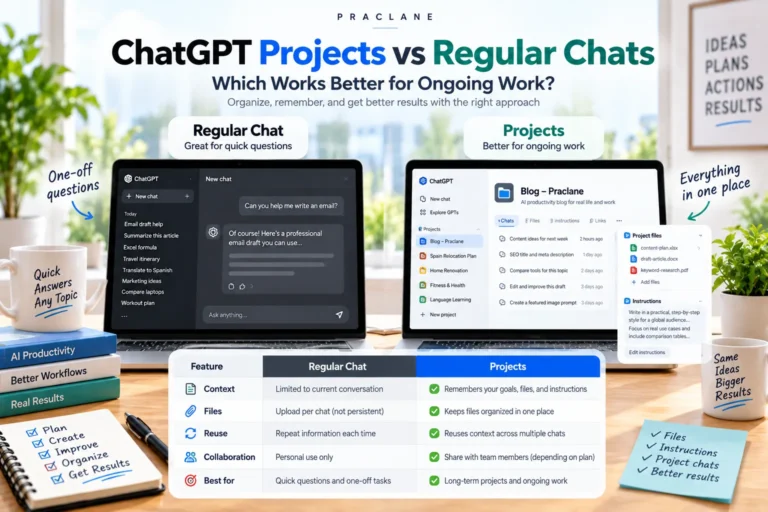
ChatGPT Projects provide a dedicated way to keep related conversations, files, instructions, and memory context together. That makes ChatGPT useful when research needs to continue into drafting, planning, analysis, or repeated work over time.
Perplexity also offers workspace and research features, but its strongest product identity remains search and research. If the work is primarily “find, synthesize, cite, and report,” that structure may feel more direct.
For the ChatGPT workflow, see our Projects guide.
A Two-Tool Workflow
You do not have to choose one product for every task.
- Use Perplexity or ChatGPT Search to discover current sources.
- Open the most important sources and verify the relevant claims.
- Bring the confirmed material into a ChatGPT Project when the work needs longer-term context, drafting, planning, or iteration.
- Return to search whenever the evidence needs to be refreshed.
Common Comparison Mistakes
- Comparing only one answer instead of the complete workflow.
- Assuming more citations automatically means greater accuracy.
- Ignoring plan-specific limits and features.
- Comparing model names that may change while ignoring the product workflow.
- Using secondary sources when a primary source is available.
- Choosing a research tool without checking what you need to do after the research.
Frequently Asked Questions
Is Perplexity better than ChatGPT for search?
Perplexity is more explicitly search-centered, while ChatGPT combines search with a broader assistant and workspace. Which fits better depends on whether the search itself is the main task or the first step in a larger workflow.
Does ChatGPT provide sources?
Yes. ChatGPT Search can provide citations and source links for current web information. OpenAI recommends opening citations and checking that they support important claims.
Does Perplexity use different AI models?
Yes. Perplexity’s eligible paid plans currently allow access to multiple advanced models, while available models vary by plan, mode, and account. Perplexity notes that its model lineup changes over time.
Can I use both ChatGPT and Perplexity?
Yes. A practical setup is to use either product for source discovery and verification, then use the tool whose workspace best fits the next stage of the task.
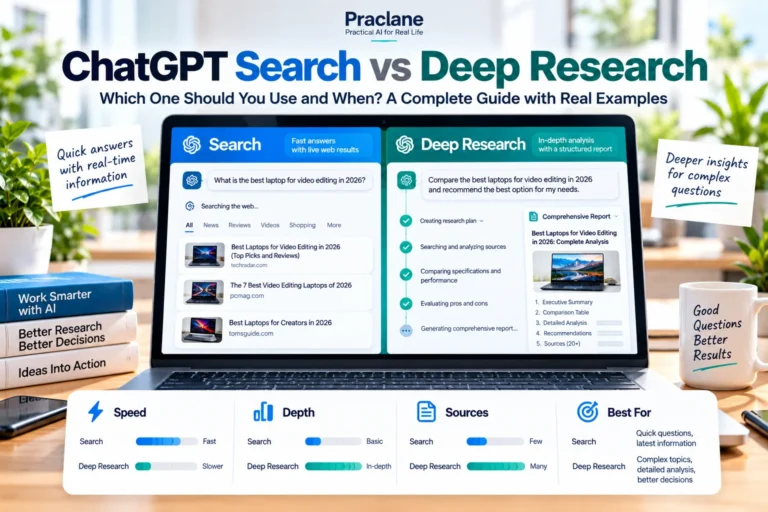
If you are deciding between a quick web answer and a deeper multi-source investigation inside ChatGPT, see our ChatGPT Search vs Deep Research comparison.
Final Thoughts
ChatGPT and Perplexity overlap heavily in web research, but their product emphasis is different.
Use Perplexity when you want the workflow to stay centered on search and sources. Use ChatGPT when research needs to continue into a broader, persistent AI workspace.