How to Use ChatGPT for Meal Planning: 10 Practical Ways to Plan Meals and Grocery Lists
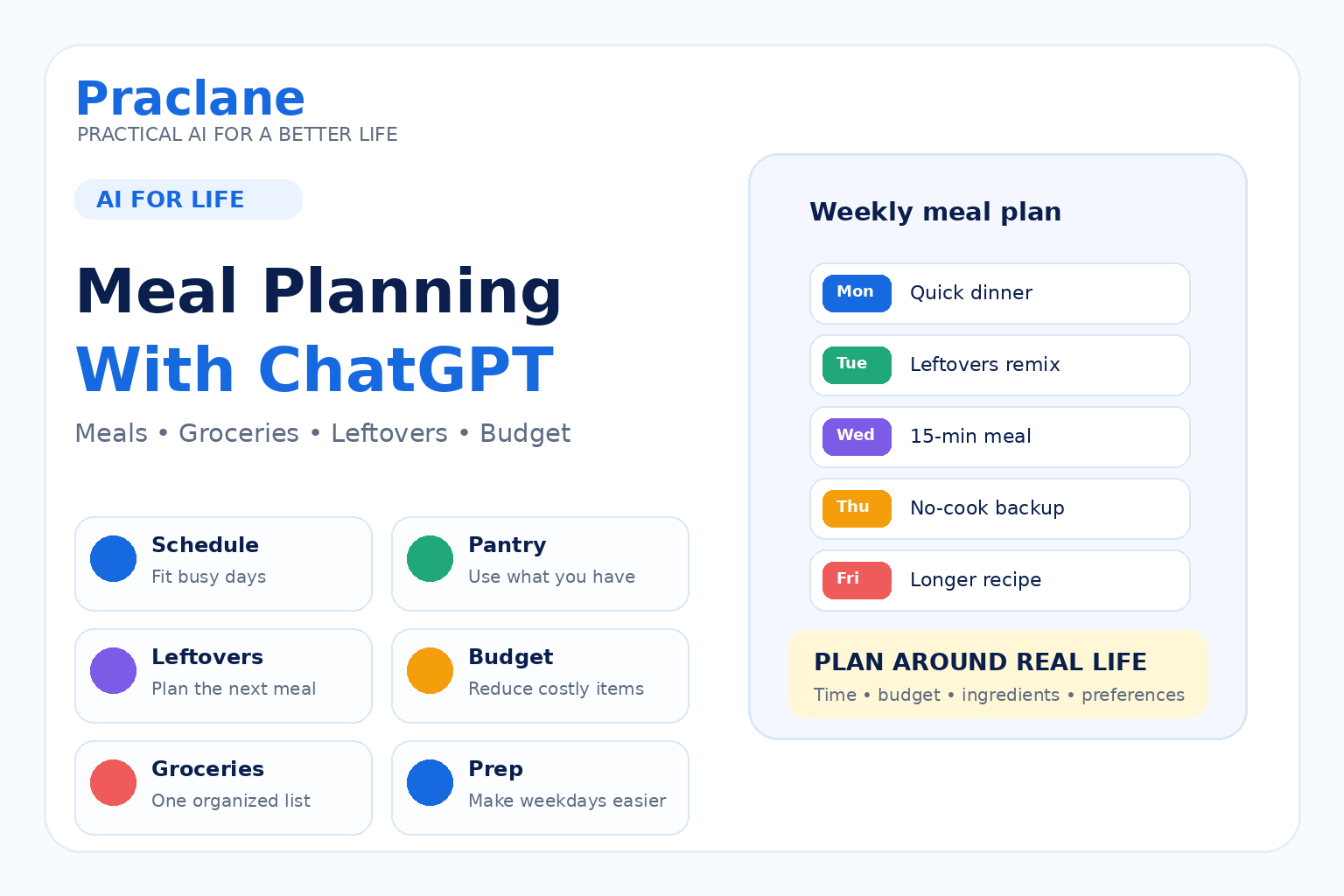
Meal planning sounds simple until you have to balance time, budget, ingredients, preferences, leftovers, and the question of what to cook every day.
ChatGPT can help turn those constraints into a practical plan. The key is to give it your real situation instead of asking for a generic list of meals.
This guide shows how to use ChatGPT for meal planning with 10 practical methods for weekly meals, grocery lists, leftovers, substitutions, and realistic cooking routines.
For broader everyday uses, see our 10 practical things you can do with ChatGPT. If you want stronger instructions, our prompt guide explains how to add useful context.
What ChatGPT Is Good at for Meal Planning
ChatGPT is useful for organizing meals around your schedule, reusing ingredients, building grocery lists, suggesting substitutions, and adjusting a plan when your week changes.
The best meal plan is not the most impressive one. It is the one you can realistically cook, afford, and repeat.
1. Start With Your Real Constraints
Tell ChatGPT how many people you are feeding, how often you cook, how much time you have, what foods you like, and what you want to avoid.
Plan five weekday dinners for two people. I can cook for 30 minutes on Monday through Thursday and one hour on Friday. Budget: about $80 for dinners. We like chicken, rice, pasta, vegetables, and spicy food. Avoid mushrooms. Reuse ingredients where possible.
2. Build the Week Around Your Schedule
Not every day should require the same amount of cooking.
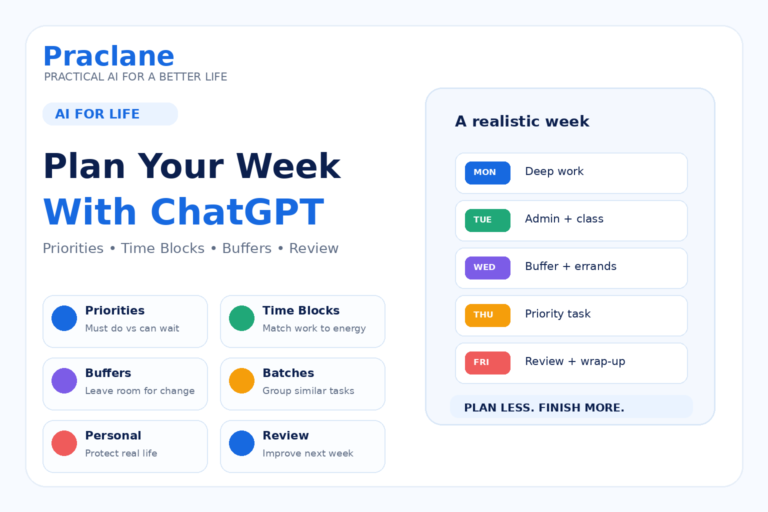
Here is my week: Monday late meeting, Tuesday normal, Wednesday gym after work, Thursday very busy, Friday more time. Match the easiest meals to the busiest days and put anything that takes longer on Friday.
This makes the plan fit your week instead of forcing your week to fit the plan.
3. Reuse Ingredients Without Eating the Same Meal
One way to reduce cost and waste is to use the same core ingredients in different ways.
Create four dinners that reuse chicken, bell peppers, onions, spinach, rice, and tortillas, but make each meal feel different. Tell me which ingredients can be prepped together.
4. Turn Leftovers Into the Next Meal
I will have leftover roasted chicken and vegetables after Monday. Give me two ideas for Tuesday that use the leftovers but do not feel like the same meal. Keep extra ingredients minimal.
This is especially useful when you cook larger portions intentionally.
5. Create One Organized Grocery List
Once the menu is set, ask ChatGPT to merge the ingredients instead of listing groceries meal by meal.
Turn this five-day meal plan into one grocery list. Combine duplicate ingredients and group the list into produce, protein, dairy, pantry, frozen, and other. Estimate quantities for two people and flag anything I should check at home before buying.
6. Plan From What You Already Have
I already have eggs, rice, canned tomatoes, frozen peas, pasta, garlic, soy sauce, and two chicken breasts. Suggest three dinners that use as much of this as possible. Give me the smallest additional shopping list.
Starting with your pantry can be more useful than starting with recipes.
7. Create a Budget-Friendly Version
If the original plan is too expensive, ask ChatGPT to identify the costly ingredients and replace them strategically.
Make this meal plan cheaper without changing every meal. Identify the three ingredients likely to drive the cost most and suggest lower-cost substitutions. Keep the cooking time similar.
Actual grocery prices vary by store and location, so use the result as a planning framework rather than an exact budget.
8. Adapt Meals for Different Preferences
We are cooking one dinner for three people. One person likes spicy food, one does not, and one prefers less meat. Suggest meals where the base can stay the same and toppings or portions can be customized at the table.
This can be easier than making completely separate meals.
9. Build a Simple Meal-Prep Session
I have 75 minutes on Sunday. Based on this weekly meal plan, tell me what I can safely prepare in advance to reduce weekday cooking. Put the tasks in an efficient order and separate prep from final cooking.
Use normal food-safety guidance for storage, refrigeration, reheating, and perishables. When in doubt about how long a prepared food is safe to keep, check an authoritative food-safety source.
10. Revise the Plan When the Week Changes
A useful plan should be easy to repair when real life changes.
My Thursday plans changed and I will not cook. Rework the rest of this meal plan so ingredients are not wasted. Move or replace meals as needed and update the grocery list.
A Reusable Meal-Planning Prompt
Create a [number]-day meal plan for [number] people. Budget: [budget]. Cooking time: [time by day]. Foods we like: [foods]. Foods to avoid: [foods]. Ingredients already at home: [ingredients]. Reuse ingredients across meals, plan leftovers intentionally, and finish with one consolidated grocery list grouped by store section. Ask me for any missing information that would materially change the plan.
You can also save a version of this structure in a personal prompt library. Our ChatGPT prompt templates guide includes reusable structures for other everyday tasks.
What ChatGPT Should Not Decide for You
Meal planning can involve allergies, medical conditions, pregnancy, medication interactions, eating disorders, or other needs where generic AI suggestions are not enough. For those situations, use qualified medical or nutrition guidance rather than relying on a general meal plan.
Also check ingredient labels and restaurant or packaged-food information yourself when an allergy or intolerance matters.
Common Meal-Planning Mistakes
- Creating seven complicated dinners for a busy week.
- Ignoring ingredients already in the kitchen.
- Buying every ingredient for only one recipe.
- Planning leftovers without deciding when they will be used.
- Using an estimated grocery budget as if it were a current store price.
- Following generic nutrition advice when you have a medical dietary need.
Frequently Asked Questions
Can ChatGPT make a weekly meal plan?
Yes. It can organize meals around your schedule, preferences, cooking time, ingredients, and budget. The more realistic your constraints are, the more useful the plan tends to be.
Can ChatGPT create a grocery list?
Yes. It can combine ingredients across multiple meals, remove duplicates, group items by store section, and flag ingredients you may already have.
Can I use ChatGPT for a diet plan?
It can help organize general food preferences and routines, but medical nutrition needs should be handled with qualified professional guidance. Do not rely on a general AI meal plan to manage a health condition.
Final Thoughts
ChatGPT is most useful for meal planning when you treat it like an organizer rather than a recipe generator.
Give it your real week, real budget, real ingredients, and real preferences—then let the plan adapt around them.